
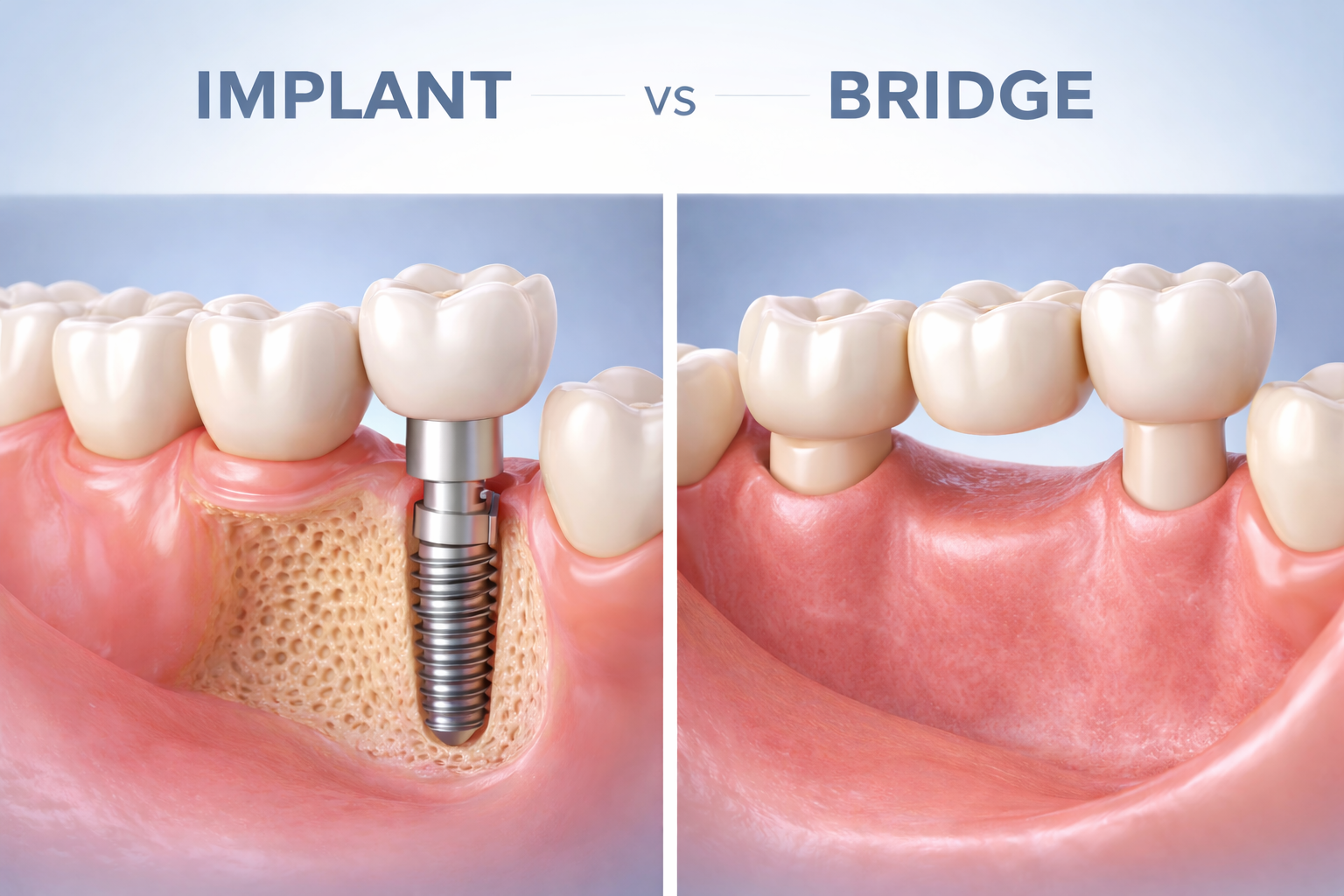
What Is a Dental Implant?
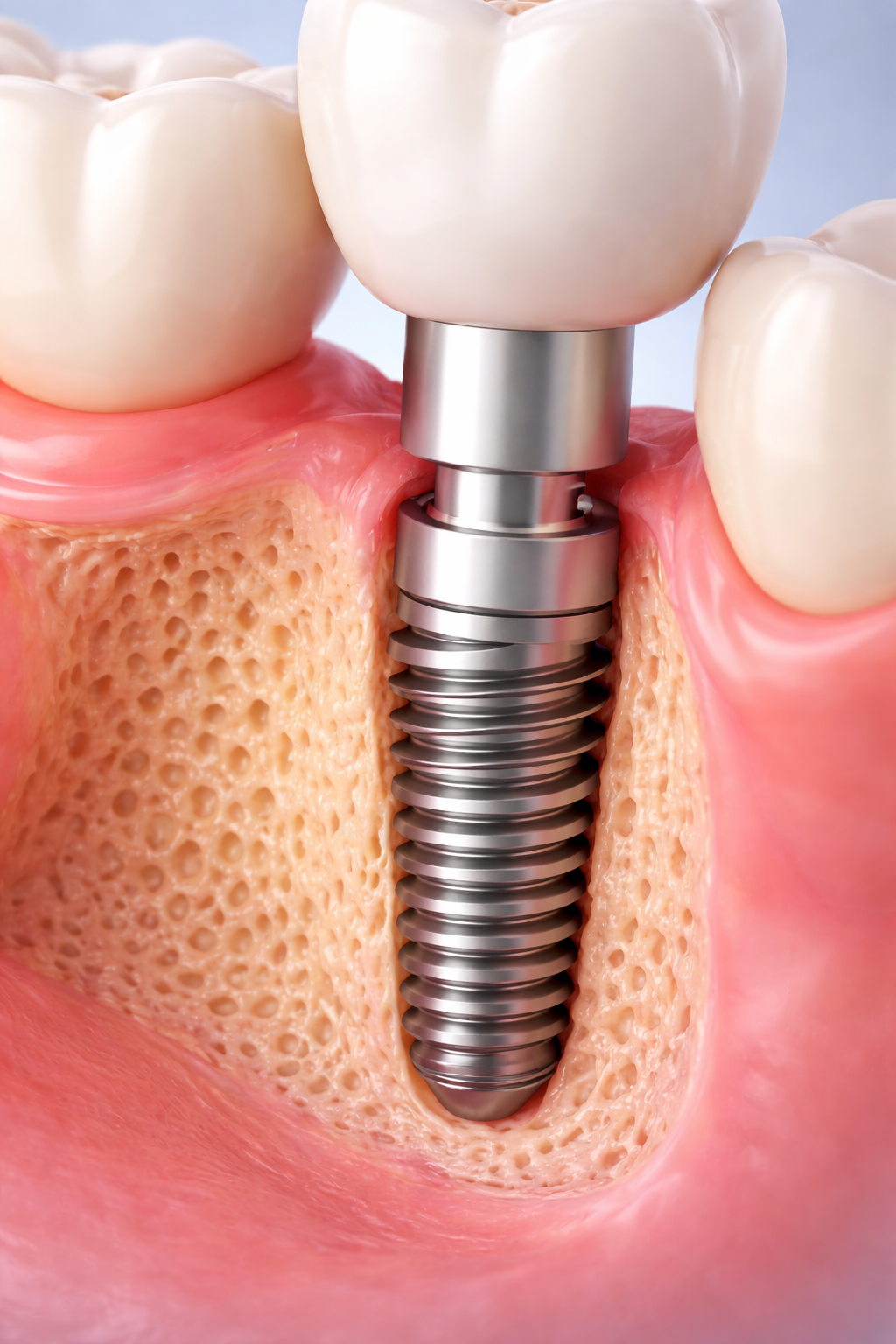
A dental implant is a titanium post that's surgically placed into your jawbone, acting as an artificial tooth root. Once it fuses with the bone — a process called osseointegration that takes 3 to 6 months — a crown is attached on top to look and function exactly like a natural tooth.
Implants are the gold standard for tooth replacement. They don't involve the neighboring teeth at all, they preserve your jawbone, and with proper care they can last a lifetime. Practices like Great Lakes Dental in Troy and Premier Dental Care in Dearborn have placed thousands of implants and consistently earn strong reviews for their precision and patient communication throughout the process.
The tradeoff: implants require surgery, a healing period, and a higher upfront cost. They're also not the right choice for every patient — you need sufficient bone density and healthy gums to qualify.
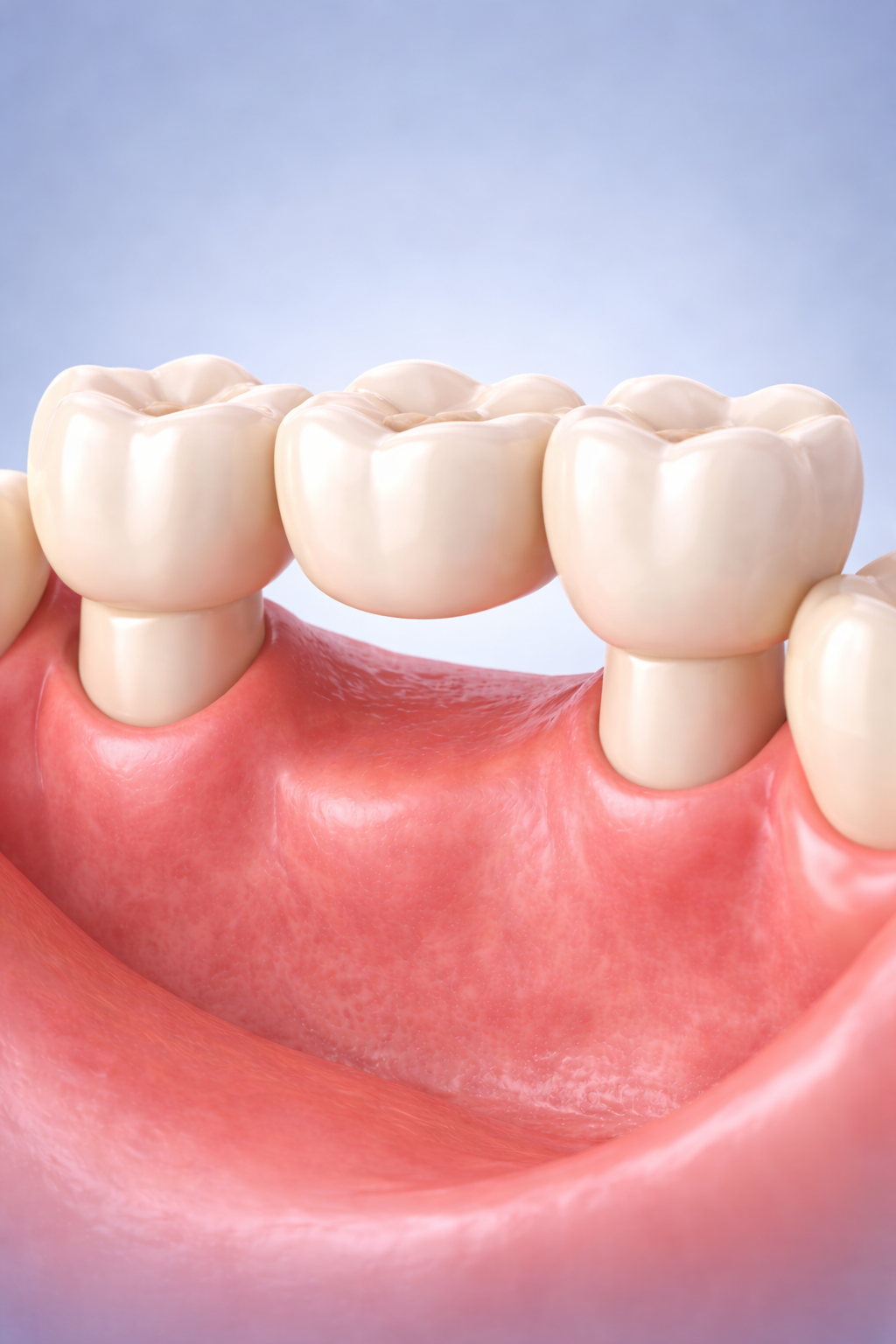
What Is a Dental Bridge?
A dental bridge literally bridges the gap left by a missing tooth. It works by crowning the two healthy teeth on either side of the gap — called abutment teeth — and suspending a false tooth (called a pontic) between them. The result is a fixed, non-removable restoration that looks natural and restores your bite.
Bridges are faster, less expensive upfront, and don't require surgery. Most bridges can be completed in two appointments over two to three weeks. However, to place a bridge, your dentist has to permanently alter the two neighboring teeth — shaving them down to accept crowns — even if those teeth are perfectly healthy. That's a significant trade-off many patients don't fully consider until it's explained to them.
Bridges also don't prevent bone loss in the jaw the way implants do. Over time, the bone beneath the missing tooth can shrink, which can affect the fit of the bridge and the appearance of your smile.
Implants vs. Bridges: Side by Side
| Factor | Dental Implant | Dental Bridge |
|---|---|---|
| Upfront cost | $3,000–$5,000 per tooth | $2,500–$6,000 for 3-unit bridge |
| Timeline | 3–6 months total | 2–3 weeks |
| Surgery required | Yes | No |
| Affects neighboring teeth | No | Yes — they must be crowned |
| Preserves jawbone | Yes | No |
| Lifespan | 20+ years, often lifetime | 10–15 years average |
| Feels like natural tooth | Yes | Very close |
| Insurance coverage | Partial, varies by plan | More commonly covered |
| Best for | Long-term investment, healthy bone | Faster fix, lower upfront cost |
* Cost estimates are regional averages. Always contact the practice directly for an exact quote.
When an Implant Is the Better Choice
An implant is generally the better long-term investment when:
- You have healthy bone density and gums
- The neighboring teeth are healthy and you don't want them altered
- You're replacing a single tooth
- You want a permanent solution you'll never have to replace
- You're willing to wait for the healing process
At Royal Oak Family Dental, patients choosing implants are walked through a detailed treatment plan that includes 3D imaging to assess bone density before any procedure begins. This upfront evaluation is what separates a successful implant from a complicated one — always ask whether the practice uses cone beam CT scanning before implant placement.
When a Bridge Makes More Sense
A bridge may be the right call when:
- You don't have sufficient bone for an implant without a graft
- You need the restoration completed quickly
- The neighboring teeth already need crowns
- Budget is a significant constraint right now
- You have certain medical conditions that make surgery risky
Practices like Southfield Dental Associates are upfront about helping patients weigh both options realistically — including financing through CareCredit and Cherry for patients who want an implant but need to spread the cost. The honest conversation about what fits your life and budget is as important as the clinical recommendation.
What About Insurance and Financing?
Most dental insurance plans cover bridges more readily than implants, since implants are still considered a "premium" option by many carriers. That said, coverage varies widely — some plans cover 50% of implant costs up to your annual maximum, while others exclude them entirely.
Don't let insurance dictate the clinical decision. Figure out the best option for your mouth first, then work backwards on how to pay for it. Most Metro Detroit practices that do implants offer financing through CareCredit, Cherry, or Sunbit — many with 12-month zero interest periods that make the cost very manageable month to month.
Always ask the practice for a pre-treatment estimate from your insurance before committing. A good treatment coordinator will do this for you automatically.
Questions to Ask Your Dentist
Before committing to either option, make sure you get answers to these:
- Do I have enough bone for an implant, or would I need a bone graft first?
- Are my neighboring teeth healthy enough to avoid crowning them?
- What does my insurance cover for each option?
- What financing options do you offer?
- How many implants or bridges have you placed, and can I see examples?
- What happens if the bridge fails in 10 years — is an implant still possible then?
A dentist who takes time to answer all of these questions thoroughly — without rushing you toward the more expensive option — is one you can trust with your care.
The Bottom Line
If you can qualify for an implant and can manage the cost — even with financing — it's almost always the better long-term decision. You're preserving your bone, protecting your neighboring teeth, and investing in something that could last the rest of your life.
But a well-placed bridge from a skilled dentist is still an excellent restoration that millions of patients are happy with. The right choice depends on your bone health, your budget, your timeline, and how you feel about surgery.
The most important step is finding a Metro Detroit dentist who will give you an honest assessment of both options. Use our questionnaire to tell us what you're looking for and we'll match you with practices that specialize in implants and restorative care, with real patient reviews to back them up.
Find an Implant Specialist in Metro Detroit
Browse practices with implant experience, real patient reviews, and financing options — all in one place.
Find Implant Dentists Near You →